Scoreboard Comfort: Live Totals When a Two-Goal Lead Is a Front
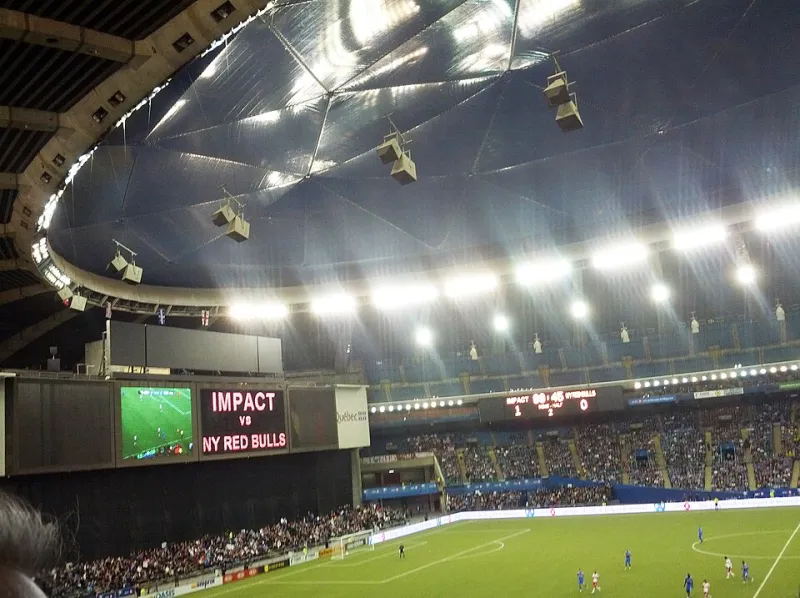
Photo: Gates of Ale, CC BY-SA 3.0, via Wikimedia Commons
There is a moment in every live soccer market when the scoreboard starts doing the talking. It is 2-0 in the 58th minute, the favorite has scored twice, and the betting app suddenly looks like a finished story. Over bettors feel buried. Under bettors feel clever. Next-goal bettors assume the leading side will add another because, well, it already has two.
That is scoreboard comfort, and it is one of the most expensive feelings in live betting. A two-goal lead is not a mood. It is a state. The book prices the state. Bettors price the story. The gap between those two things is where live totals get interesting — and where a lot of US soccer bettors get sliced up between NFL commercial breaks.
Clinical Is Not the Same as Dominant
A 2-0 lead can be built in two very different ways. The first is dominance: high possession, repeated entries into the box, big chances, a goalkeeper under real stress. The second is efficiency: two goals from a handful of half-chances, a deflection, a set piece, a counterattack, and a lot of defending in between.
Both scorelines look identical in the corner of your screen. They should not be priced identically in the live market.
When the leading side has been clinical rather than dominant, the trailing team often has more of the ball, more territory, and more shot volume. That does not mean a comeback is coming. It means the game state is forcing the trailing team forward, and the leading team is being asked to do something it may not do well: sit deep, absorb pressure, and protect a lead without conceding the next goal.
That is exactly when the live total can become a trap in either direction. The market may shorten the under because 2-0 feels safe. Or it may keep the over alive because the trailing side is pushing. The number itself is not the signal. The reason behind the number is.
What the Book Is Actually Repricing
At 2-0, the live total is usually sitting around 2.5 or 3.0 depending on the minute, the competition, and the pre-match expectation. The next goal becomes the hinge. If the total is 2.5, one more goal cashes the over and kills the under. If it is 3.0, a third goal pushes the total and changes the math again.
Books are not just counting goals. They are weighing time, game state, substitution patterns, and the likelihood that the trailing manager throws numbers forward. That is why the next-goal market can look strange. The leading team may be favored to score next simply because it is ahead, even when the trailing side is the one camped in the final third.
Asian lines add another layer. A live handicap may ask you to lay a big number with the leader or take a generous head start with the trailing side. If the 2-0 lead is a front — two goals from low-quality chances while the run of play favors the other team — the live handicap can be slower to adjust than the total. That lag is not free money. It is a risk premium with a short shelf life.
The False-Comfort Checklist
Before you touch a live total at 2-0, run a quick scan. You do not need a data science stack. You need to know whether the scoreline is telling the truth.
Shot quality, not just shot count. A trailing team with 12 shots from outside the box is not the same as a trailing team with four shots from inside the six-yard box. Look for big chances, box entries, and whether the goalkeeper is actually working.
The trend after the second goal. The five to ten minutes after a goal tell you a lot. Is the leading team still pressing? Is it dropping into a low block? Is the trailing team winning second balls and recycling possession? That window is often when the live market is still catching up.
Substitution intent. Around the 60th to 70th minute, the trailing manager usually shows his hand. If he brings on two attackers and switches to a back three, the game is being stretched. If the leading manager responds with a defensive midfielder and a center-back, the book may be right to shorten the total.
Set-piece and card pressure. A trailing team that is losing the run of play but winning corners can still create chaos. A leading team that is collecting yellow cards for tactical fouls is a team under stress. Those details matter more than the possession bar on your app.
Market behavior. If the trailing team is stacking pressure and the live total has not moved, ask why. Sometimes the book is slow. Sometimes the book knows the leading team is still dangerous on the counter. Do not assume the market is asleep just because you are excited.
When the 2-0 Is Real
The flip side matters just as much. Sometimes a 2-0 lead is not a front at all. The leading team is winning every duel, cutting off transitions, and creating chances at will. The trailing team is passing sideways and taking low-value shots. In that game, the under may be the trap. The leading side may be more likely to make it 3-0 than the trailing side is to make it 2-1.
That is why the checklist has to be neutral. You are not looking for a comeback. You are looking for a mispriced game state. If the leading team is genuinely dominant, the next-goal market and the live total can still be fair — or even lean toward another goal. If the leading team is living off two clinical moments, the market may be giving it too much credit for a scoreline it did not earn.
A Practical Live-Betting Approach
Pick one market and one reason. If you think the trailing team is creating real pressure, the next-goal market or a live Asian line may express that view more cleanly than a total. If you think the leading team is going to shut the game down, the under is the direct route. Do not stack three correlated live bets and call it analysis.
Wait for a checkpoint. The 60th-minute substitution window is usually more informative than the 46th-minute restart. Live odds move fast, and the best prices often appear just before the market fully digests a tactical change. That cuts both ways: a slow feed or a stale number is not an invitation to chase.
Set a limit before kickoff, not after a bad beat. Live soccer is fast, and the app is designed to keep you moving. Treat cash-out as a price, not a rescue. If a bet has gone wrong, the buyout button is not a do-over — it is the book quoting you a new number.
And remember the basics: bet within your budget, avoid chasing losses, and take a break when the screen starts feeling like a scoreboard you have to beat. If gambling stops being entertainment, call 1-800-GAMBLER. A 2-0 lead can lie. Your bankroll rules should not.