The Halftime Reprice: Catching Soccer Books Off Guard Before the Second Half Starts
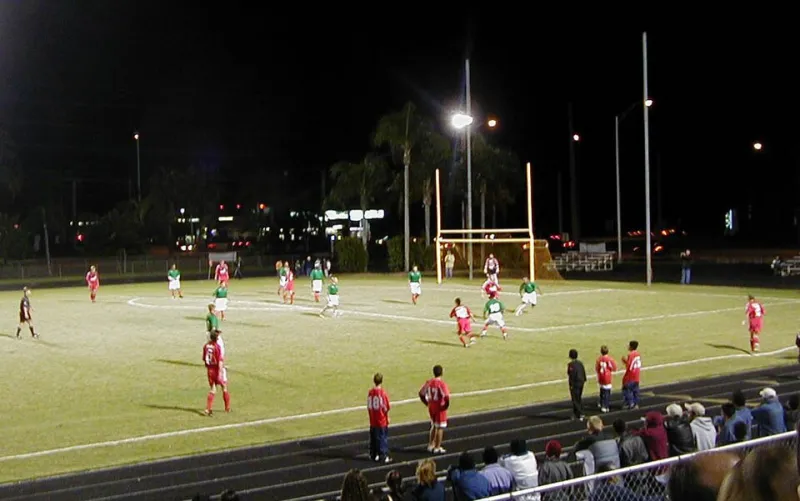
Photo: Roger W from Sarasota, Florida, U.S.A., CC BY-SA 2.0, via Wikimedia Commons
Halftime in soccer can feel like a commercial break. You grab a drink, check the NFL score, and assume the live odds will simply pick up where they left off. They do not. In the time it takes to walk from the kitchen back to the couch, the book has settled first-half bets, recalculated its liability, and rebuilt the board from scratch. That rebuild is the story. Sometimes it is sharp. Sometimes it is a reflex. The gap between those two things is where live bettors can find an edge, or where they can donate a unit to the house.
At VN88 Betting Edge, we treat halftime as an information window, not a hurry-up offense. The first few minutes after the new lines post are often the loudest and least settled. US bettors who understand why the numbers move can avoid the trap of betting the first shiny price on the screen.
Why the Board Looks Different at the 46th Minute
A live soccer book is not a single brain. It is a collection of models, traders, and market flow. At halftime, the model gets a clean input: score, stats, cards, substitutions, and the pregame expectation. Traders then blend that with the money they expect to arrive. During a busy US Saturday or Sunday, when Premier League, MLS, and Liga MX action overlap with football and basketball, the book may also be managing volume across dozens of events. Lines do not always reopen at the perfect number. They reopen at a number the book believes it can defend.
That is why the 46th-minute line can look strange. A favorite that dominated possession but created nothing may still be priced as if a goal is coming. A team that scored against the run of play may be treated like it is about to collapse. The book is not necessarily wrong. It is making assumptions. Your job is to decide whether those assumptions are baked into the price or whether the price has overcorrected.
Next Goal: The Market Most Likely to Overreact
Next goal is the market where halftime panic shows up first. If the favored team trails 1-0, the next-goal price for that favorite often shortens sharply at the break. Sometimes that is fair. If the favorite had 10 shots and two big chances, the market is telling you the goal is live. But if the favorite had 65 percent possession and one harmless shot from outside the box, the price may be built on reputation and public expectation rather than evidence.
Look for inconsistency. If the next-goal price for the favorite drops hard but the total goals line barely moves, the book may be reacting to money rather than a real read on the match. If the Asian handicap for the second half also stays stable, that is another clue. A true tactical shift usually shows up across markets. A panic move often shows up in one market and leaves the others looking confused.
Also check the team news. A halftime substitution can change everything. If the trailing team brings on a striker and switches to a back three, the next-goal price should move. If the lineup is unchanged and the price still collapses, ask yourself why. Sometimes the answer is simple public money. Sometimes it is a trader trying to protect a liability. Either way, you do not have to accept the first number.
Second-Half Corners: Where Books Guess the Script
Corner markets are noisy, and halftime is when books often guess the script. If the first half had only two corners, the second-half line might still open at 4.5 or 5.5 because the book expects the trailing team to chase. That can make sense. A team down a goal often pushes fullbacks forward, crosses more, and settles for blocked shots that become corners. But the game state matters. A team leading 2-0 may not chase at all. A team down 1-0 with 10 men may not be able to get forward.
The trap is betting the over simply because the first-half corner count was low. Corners are not a steady drip. They come in bursts, and one early second-half corner can make the live line jump before you have any real information. If the halftime corner line is far from both the first-half tempo and the game state, that is worth a look. If it is already shaded toward the public over, the value may be on the other side or on a pass.
Asian Handicap: The Reset That Often Makes More Sense
Asian handicap is usually the most honest market at halftime because it resets the match. The first half is gone. You are betting on the second half as its own mini-game, with the score already known. That does not mean the line is always efficient. A favorite that trails 1-0 may be asked to win the second half by 1.5 goals. If the pregame gap in class was large and the favorite created chances, that can be a fair ask. If the favorite has been second-best in midfield, it is not a bargain just because the badge is bigger.
Use the quarter-ball lines carefully. A +0.25 or -0.25 second-half handicap can turn a good read into a push or a half-loss. That is fine if you understand it, but it is not the place to chase a feeling. Compare the halftime handicap with the pregame line and the first-half stats. If the book has moved further than the performance deserves, you may have a case. If the line matches the run of play, there is no edge in forcing a bet.
Spotting a Panic Line in the First Five Minutes
The first five minutes after the whistle are not for speed. They are for reading. Check whether the next-goal price moved without a red card or substitution. See if the total line and the handicap agree with that move. Look for books that disagree with each other. If one book has the favorite at -110 to score next and another has +105, that gap is information. It tells you the market has not settled.
Do not let a boost or a promo blur the number. A halftime special can make a bad price feel like a good one. The same goes for same-game parlays. Stacking a next-goal bet with a corner bet and a player prop does not create value. It hides the fact that you are paying for three assumptions at once.
A Responsible Checklist for the Reset
Before the second half starts, set a maximum stake for the match. Decide it at halftime, not after a bad beat. Wait for the first line to settle, then compare it with the 44th-minute number. Check substitutions, injuries, and formation changes. If the price does not match the game state, pass. If it does, use a small unit and treat it like any other bet. Do not chase a loss because the clock is moving. Do not bet every halftime line just because it is there. And keep the long view: live betting is entertainment, not a rescue plan. If the session stops being fun, stop the session.
Halftime is a reset for the book and for you. The books that reopen smartly tend to price the game state. The books that panic tend to price the story. Your edge is in telling the two apart before the second half kicks off.