The Long Pause: What to Do When VAR Locks Your Live Soccer Odds
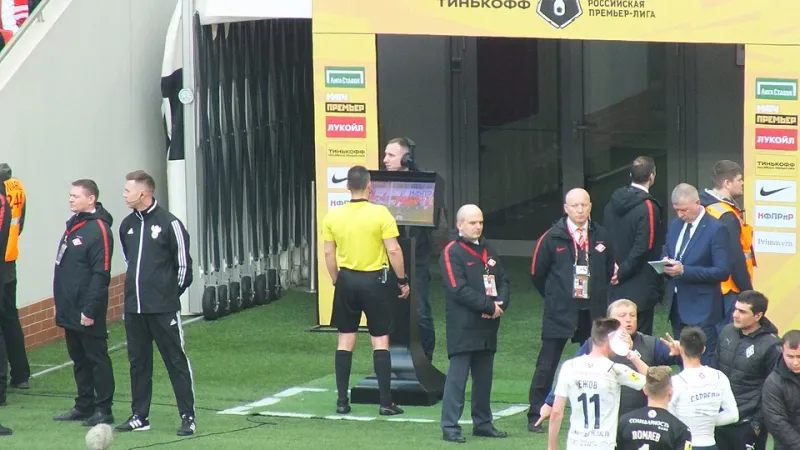
Photo: Brateevsky, CC BY-SA 4.0, via Wikimedia Commons
You know the scene. It is a tight match, your live bet slip is open, and the referee trots toward the monitor. Suddenly the odds grey out. The app still works, the clock still runs, but your market is frozen. For a US soccer bettor, that pause can feel longer than stoppage time.
VAR has become part of the live betting rhythm. In November 2026, with MLS playoffs and European league fixtures filling screens from morning to night, those reviews are not rare interruptions. They are part of the product. The bettor who understands the freeze has a calmer experience than the one who refreshes the app like it owes them money.
Why the book hits pause before the ref decides
A sportsbook does not freeze a live soccer market because it enjoys watching you wait. It freezes because the next few seconds can change the probability of almost everything on the board. A penalty can flip the match result, the total goals, the next goal, the card count, and a pile of player props. A red card can do even more damage to the pre-review numbers.
The book also has an information problem. The referee, the VAR team, and the broadcast feed may know more than the pricing model does at that exact moment. Taking new bets at old prices during that gap is not a risk most operators want. So the market goes dark. In a sense, the freeze is a seatbelt, not a snub.
There is a practical side for US bettors, too. Live odds often travel through feed providers and trading teams before they reach your app. A freeze on your screen may happen a beat after the stadium feed, or a beat before the app catches up. That lag is exactly why you should not treat a locked market as a secret invitation.
The stare: what happens to bets already in play
If you placed a bet before the freeze, it generally stands under the book's rules. The review does not automatically void your ticket, and it does not automatically save it either. Cash-out options may disappear, or they may return with a price that looks like a different sport. That is normal risk management.
What you should not do is sit there hammering the refresh button and assuming the market will reopen at the same number. It will not. The first price after a review is a fresh opinion, often shaped by the crowd reaction and the trading team's read of the incident. Your old number is history.
Which markets thaw first, and which come back angry
Not every live market reopens at the same speed. The main match result and total goals usually return first because they are the deepest, most liquid markets. Next-goal and Asian handicap lines often follow. Corners and cards can lag because they depend on how the match state changes after the decision. Player props are frequently the slowest to come back, especially if the review involves a striker, a goalkeeper, or a defender on a booking.
That means the first wave of prices can be misleading. If a penalty is awarded, the favorite's price may shorten sharply, but the total goals market can overreact in the other direction. If a goal is disallowed, the old total is dead, but the new total may still be adjusting to the clock. The market is not just repricing the incident. It is repricing the remaining time.
Some books reopen too slowly, leaving a number that looks tempting because it belongs to a match state that no longer exists. Others reopen too aggressively, with wider margins and a price that punishes anyone who charges in. A stale line is not a gift. It is often a grading dispute waiting to happen.
Plan entries around likely review moments
You cannot predict every VAR review, but you can spot the situations that invite one. Penalty-area scrambles, tight offside finishes, handball shouts, and red-card challenges are all review magnets. If you are planning a live entry, do not pre-load it in your head as a guarantee. Have a plan for the freeze.
One simple rule helps: wait for two clean prices, not one. Let the market reopen, update, and settle for a moment. Compare at least one other book if you have access. If the price still makes sense after the pause, fine. If it only made sense before the referee pointed at the monitor, let it go.
Also remember that soccer's clock is not your friend during a review. A match can lose two or three minutes of playing time while the market is locked. When the line returns, the remaining-time math has changed. That is especially true for totals, next-goal markets, and any bet that depends on late-match urgency.
A frozen market is not a frozen bankroll
A locked market should be a hard stop, not a challenge. If you had a bet queued and the review interrupts it, accept the interruption. Do not double the stake when the market reopens to make up for the wait. Do not chase a cash-out quote that vanished. And do not convince yourself that the book owes you a better number because you stared at a grey screen for 90 seconds.
Here is a short responsible-play checklist for VAR stoppages:
- Set your maximum live exposure before kickoff, not during a review.
- Treat a frozen market as a timeout for your betting, not just for the referee.
- Never chase the first post-review price.
- Wait for the market to update at least twice before considering an entry.
- Compare a second book when possible.
- Keep a simple log of live bets so you can see whether pauses are hurting your decisions.
- Use deposit limits, timeouts, and session reminders if live betting tends to speed you up.
- If you feel angry at the screen, close the app. That is not a betting edge.
VAR is here to stay, and so are frozen markets. The bettor who wins the long pause is not the one who refreshes fastest. It is the one who treats the freeze as information: the game has changed, the price has changed, and patience is part of the wager.