The Second-Leg Discount: Live Soccer Betting When the Aggregate Score Is Only Half the Story

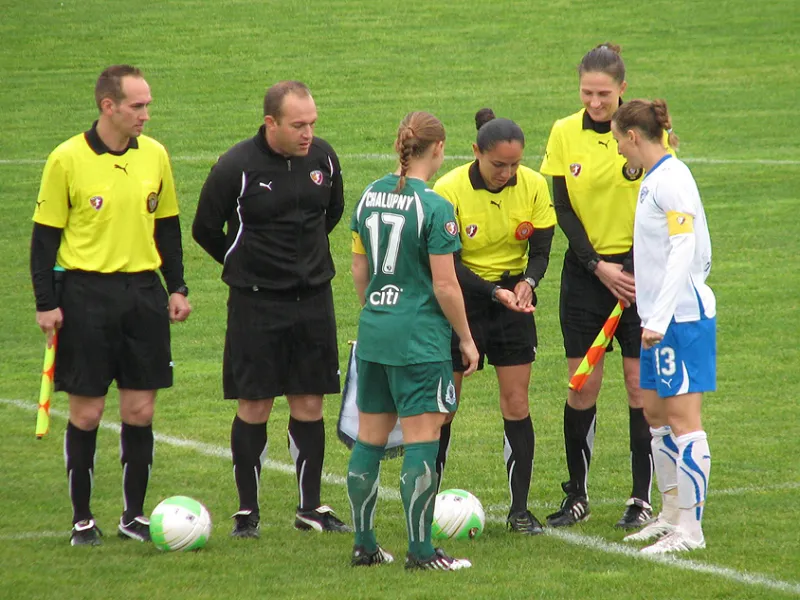
Photo: W.carter, CC0, via Wikimedia Commons
There's a specific kind of confusion that shows up in every European second leg, and it usually costs someone money before the whistle even blows. The scoreboard says 2-0 from the first leg. The live market says the trailing side is a slight favorite on the night. And somewhere in the middle, a bettor on this side of the Atlantic looks at both numbers and decides they contradict each other.
They don't. They're answering two completely different questions.
Two Markets, Two Questions
The match market asks: who wins tonight? The qualification market asks: who advances? Those are related, obviously, but they diverge hard once an aggregate score gets lopsided — and that gap is where live soccer betting gets interesting.
Take the common setup. Team A leads 2-0 from the first leg. Team B has to score twice just to force extra time. In the live match market, Team B might be priced as a modest favorite, because they'll be pushing, they're at home, and Team A is content to sit deep and defend a cushion. In the qualification market, Team A is still a heavy favorite — because Team B needing two goals is a genuinely hard ask against a side that has zero incentive to open up.
If you only look at the match odds, you'd think the book likes Team B. If you only look at the qualification odds, you'd think the book loves Team A. Both are true at the same time.
US bettors, in my experience, tend to bleed toward the qualification market when they're thinking about the tie as a whole — it feels like the "real" outcome — and then get surprised when the match they actually bet on doesn't cooperate.
The Extra-Time Problem
Here's the wrinkle that screws up more tickets than anything else: extra time isn't a free bonus. It's a separate 30 minutes, and it changes how both teams behave in the last 20 minutes of regulation.
A team trailing 2-0 on aggregate and 1-0 on the night is not chasing the game the way they would in a one-off. They know that a single goal also triggers extra time, which is a brand new game with its own risks. The live totals market often prices this as if the trailing side is going to throw the kitchen sink for 90 minutes, when actually the last 15 minutes can get weirdly cagey — both teams are, in a sense, managing a threshold.
That's why I'm cautious with live over bets in second legs where the aggregate is on a knife-edge heading into extra time. The tempo doesn't escalate the way the price implies. It stalls, then spikes, then stalls again.
The Away-Goals Rule Is Dead — Price Like It
Since UEFA scrapped the away-goals rule in 2021, a lot of casual bettors still carry the old mental model: an away goal is worth double, the road team has an edge, yada yada. It's not. A 1-1 draw on the road is worth exactly 1-1 in 2026. No tiebreaker. No extra weight.
What this means in live markets is that some of the old assumptions baked into pre-match numbers no longer hold. A team protecting a 1-0 aggregate lead is not going to be as rattled by conceding on the road as they would have been five years ago. Meanwhile, the market hasn't fully shaken the habit of pricing certain road teams as more dangerous than they are — there's still a sort of legacy premium in the air.
If you see a team needing an away goal priced like an away goal still matters, that's a signal. It's a soft edge for the other side, and it's the kind of thing that shows up in live markets for the first 15 minutes before books catch up.
Where the Live Value Actually Hides
A few angles I actually look for:
- The "needs two goals" mismatch. When a team needs two, the match market often overprices their win probability. They'll push, sure, but pushing against a packed defense gets you a lot of possession and not many clear chances. If the match price has moved hard toward the trailing side, check whether the qualification price has moved the same way. If it hasn't, the match market is probably overshooting.
- The 60th-minute reprice. This is the sweet spot for second legs. By the hour mark, managers have to commit — either they bring on attackers and accept defensive risk, or they accept the tie is drifting. The window right after a double substitution, before the book has fully updated, is where live value tends to sit for a few minutes.
- The cagey stretch around 75-85. As I mentioned, this is when both sides are managing the aggregate rather than chasing the match. Live totals and both-teams-to-score markets frequently lag here.
- Card markets. Second legs with a bare aggregate produce bookings — not necessarily because it's a dirty game, but because trailing sides foul, leading sides time-waste, and referees get tired of it. Live card lines react slowly to this pattern.
A Second-Leg Live Checklist
Before you hit submit on anything in a two-legged tie, run through this:
- What's the aggregate, and what does each team actually need? Not what the scoreboard says — what it means for behavior.
- Are you betting the match or the tie? Make sure the market you're clicking on is the one you actually want.
- Would this price make sense in a one-off game? If yes, ask why. Second legs are weird.
- What's the extra-time scenario, and is the live market pricing it? If not, there's a gap.
- Has the away-goals rule crept back into your reasoning? It hasn't existed for five years. Stop paying for it.
- How many substitutions have happened, and what's the manager's track record? Chasing managers and holding managers are different animals.
- Is the book's feed keeping up with the game state? Second legs move fast after goals. Stale live prices are exploitable, but only if you're quick.
Staking, Because This Stuff Gets Emotional
Second legs are the most emotionally loaded matches on the calendar — the crowd, the stakes, the narrative. That's exactly the environment where sensible bankroll rules go out the window.
Whatever size you play, keep it a flat percentage of your bankroll and treat the tie like any other fixture. Don't chase a losing qualification bet by doubling down on the match market. Don't stack correlated positions because the aggregate "feels" like it's going one way. And if the live market moves against you before the whistle, don't re-enter just to feel better about the first ticket.
The aggregate is only half the story. The other half is whether you can keep your head while the price is collapsing around you.