Ten Men and a Panic Button: Five Live Markets That Overshoot After a Red Card
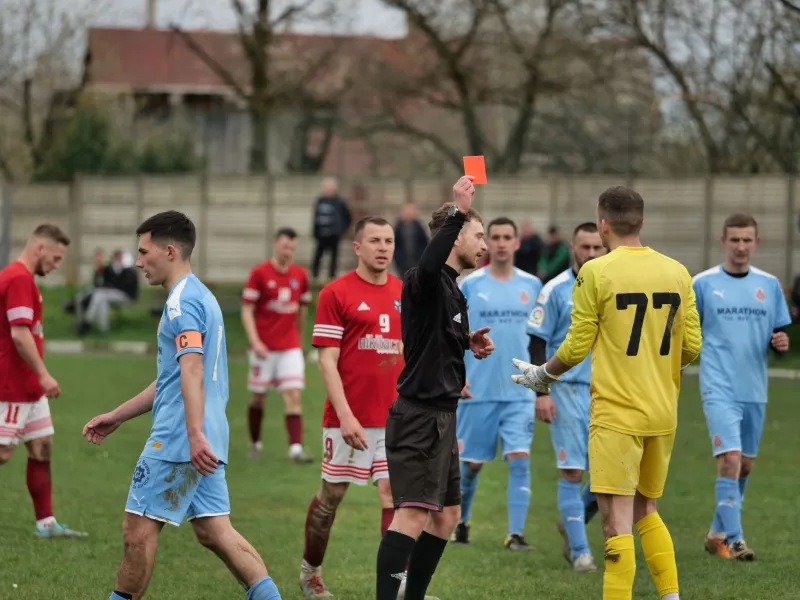
A red card is the loudest event in a football match, and live markets react accordingly. Within seconds, every price on the board moves at once, spreads widen, and the odds screen starts looking like a different sport. For a bettor with a phone in hand, it feels like an opportunity. Often it is just noise wearing a discount costume.
Why the Repricing Always Runs Hot
When a player is sent off, sportsbooks cannot wait. They have to reprice goals, handicaps, totals, and every derivative market simultaneously, and most of them lean on a model that applies a generic down-a-man adjustment first and refines later. In the first few minutes, liquidity is thin, suspensions are frequent, and the numbers you see are the book protecting itself, not the book making a considered call on this specific match.
That is not a complaint. It is simply the reality that creates the gap. Your job as a bettor is not to be first — it is to be right about which repricing went too far. From a bankroll standpoint, that means treating red-card markets as a separate risk bucket with smaller unit sizes, because the variance in these spots is genuinely higher than in a settled pre-match position.
Here are five markets where the overreaction usually shows up.
1. Second-Half Goal Totals
The reflex assumption is that ten men equals open game equals goals. Sometimes. But it depends entirely on scoreline, minute, and who is short-handed. A team reduced to ten at 0-0 in the 25th minute often collapses into a low block and kills the tempo for twenty minutes while it reorganizes. A team down a man while already leading may simply stop attacking altogether.
Before you touch a second-half total, wait for the first substitution and watch the shape for five minutes. If the manager brings on a defender or a holding midfielder, the market's goal expectation is probably still too high.
2. The Next-Goal Market
Next-goal prices on the eleven-man side shorten aggressively and immediately, because the model assumes numerical superiority converts into the next goal. In reality, the team with the extra man is often already ahead and content, or already chasing and vulnerable on the break. The shortened price reflects arithmetic, not intent.
Let the market settle, watch two or three attacking sequences, and check whether the extra man is actually being used in wide areas or whether the game is being played in midfield. If the eleven-man side is sitting deep, that next-goal price is buying a favorite that is not trying to score.
3. Adjusted Asian Handicaps
The handicap is where repricing is most mechanical. Books will frequently shift the line by roughly a goal the moment the card comes out, before adjusting for the obvious context: was it the 88th minute? Was the team already defending for its life? Was the red card a professional foul on a breakaway that changed nothing about the game state?
A late red card in a match that is already decided should barely move the handicap. When it moves anyway, that is the correction to look at — calmly, after the initial suspension clears.
4. Both Teams to Score and Team Totals
Red cards scramble these markets in both directions. Some books price a team total down so sharply that it implies the ten men will not create another chance for half an hour, which ignores how often short-handed sides score on the counter against a stretched opponent pushing forward. Others inflate the eleven-man team total past what its actual shot volume supports.
This is a market where official live stats earn their keep. Compare shots, shots on target, and touches in the box before and after the card. If the underlying numbers have not shifted as violently as the price, you have found the gap.
5. Late 1X2 and Draw Pricing
In the final twenty minutes, a red card to the favorite tends to send the draw price ballooning, on the theory that the eleven-man side will push for a winner. Sometimes that happens. Just as often, the reduced side drops everybody behind the ball, kills six minutes with a substitution and a couple of slow restarts, and the draw becomes the most likely single result on the board.
Late draw pricing after a sending-off is one of the more reliable overcorrections in live football, precisely because the market is pricing drama rather than game state.
Staking the Chaos
Red-card markets are high variance by nature, and high variance is a bankroll problem before it is a betting problem. Three habits keep it manageable:
- Shrink your unit. A red-card position should be smaller than your standard pre-match stake, not larger. The market is recalibrating and so is your confidence.
- Cap the number of live positions per match. Chaos invites stacking. Stacking invites correlated losses.
- Log the bet with the minute and the scoreline. Patterns only become visible if you write them down.
The Patient Version of This Strategy
None of the above requires you to beat the book to the punch. It requires the opposite: let the first three to five minutes of red-card repricing pass, confirm the shape with your own eyes and with official live stats, then decide whether the number still makes sense. If it does not, there is no bet. If it does, you are taking a considered position instead of a reflexive one.
And keep the responsible-play basics in place regardless of how good a spot looks. Set a session limit before the match, use deposit limits in your account, and remember that a red card market is one of the fastest ways to turn a small evening into a long one. If gambling stops feeling like entertainment, call 1-800-GAMBLER.