Doorbuster Traps: When Holiday Promo Season Quietly Reprices Your Live Soccer Bets

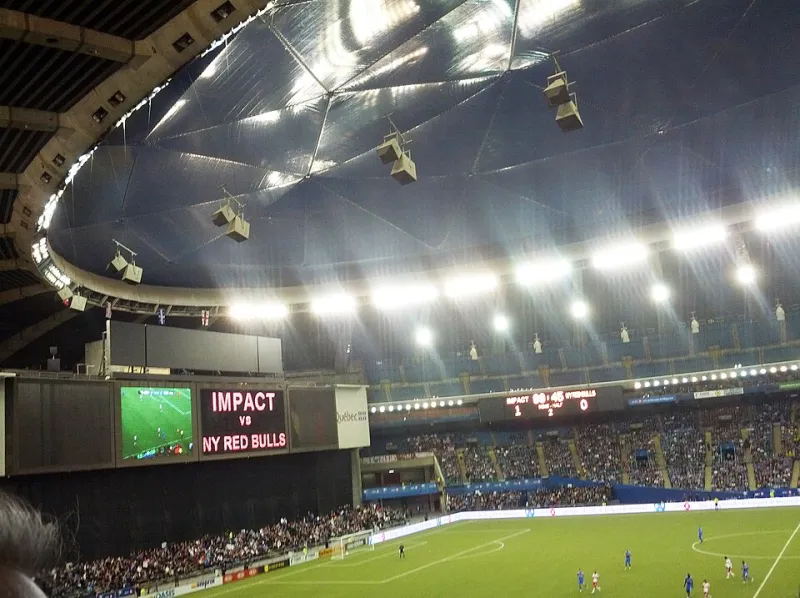
Photo: Kiran891, CC BY-SA 4.0, via Wikimedia Commons
By the time the leftovers go in the fridge, your sportsbook app has already sent eleven emails. Doorbusters, Small Business Saturday boosts, Cyber Monday deposit matches, a casino rebate you never signed up for — the entire retail calendar has been bolted onto the betting lobby. And because late November is also one of the densest fixture windows of the fall, the two things hit at once: more live soccer markets than usual, wrapped in more promotional noise than usual. That is a great deal for the sportsbook. Whether it is a great deal for you depends entirely on the order you evaluate things.
The Promo Fog: What Is Advertised vs. What Is Priced
A promo is real money, but it is also marketing. A 50% deposit match with a 10x rollover at minimum odds of -200 is not free cash — it is a short-term loan with a dress code. A boosted price on a live market is usually capped somewhere between $10 and $25, and it is frequently restricted to the pre-match line rather than the in-play number you actually wanted. A casino rebate on net losses sounds generous until you read that it is paid in promo credits and expires in seven days.
None of that makes promos bad. It just means the promo does not change the underlying probability of anything. It changes what you pay, and sometimes it changes it in both directions at once — a small credit on top, a wider spread underneath. So the working rule for the holiday season is simple: price first, promo second. If the number is bad, the free bet is a tip, not an edge.
The 30-Second Margin Check
You do not need a spreadsheet. You need conversion to implied probability.
Say a live over/under 2.5 is sitting at -115 / -105. That is 53.5% plus 51.2%, which is 104.7% — a shade under 5% vig. That is normal for an in-play totals market at a mainstream book. Now say the same fixture is showing -125 / +105 on a boosted market. That is 55.6% plus 48.8%, or 104.4%. Fine. But if you see -130 / +100, you are at 56.5% plus 50%, or 106.5% — and the $15 boost you just claimed is being quietly funded by two and a half points of extra juice that will cost you more than that across a weekend of betting.
Run that check on any market with a flashy tag next to it. The tag is a signal to look harder, not to bet faster.
Rollover Math Beats the Headline Percentage
The big number in the email is never the number that matters. The rollover is. A 100% match up to $200 with a 12x rollover on the bonus means $2,400 of qualifying action before anything comes out. If you normally put $50 a week through the book, that is a twelve-week commitment you did not plan for, and it will absolutely push you into markets and stakes you would not otherwise touch.
Do the division before you deposit. Bonus times rollover, divided by your honest weekly handle, tells you how long the promo owns you. If the answer is longer than a month, it is not a holiday gift — it is a subscription.
The Fine Print That Kills Live Bets Specifically
Two clauses matter more in November than at any other time of year.
Ineligible markets. Plenty of boosts and free-bet tokens exclude live/in-play wagering entirely, or exclude specific leagues, or require a minimum number of selections. Reading the terms after you have already placed the bet is a common and expensive habit.
Cash-out restrictions. Promo-funded wagers are often ineligible for cash-out, or the buyout is calculated against your original stake rather than the boosted price. That matters most in exactly the situation live bettors live in — a red card in the 23rd minute, a goalkeeper howler, a two-goal swing before halftime. The moment you would actually want the exit is the moment the fine print says you cannot take it. Check eligibility before kickoff, not after the sending-off.
Where Holiday Noise Bites Hardest
The distortion is not uniform. A few live windows get noticeably worse when the promo calendar is loud:
- Marquee-game corner and card markets. Public money floods these on holiday weekends, and books nudge the prices accordingly.
- Late European kickoffs that collide with the NFL slate. Thinner books, wider spreads, slower repricing — a bad combination when everyone in the app is chasing a Sunday boost.
- Second-half Asian handicaps. Books are already slow to reprice after halftime; add promo traffic and the lag gets longer.
- Anything tagged with a countdown timer. Timers are there to shorten your deliberation, and deliberation is the entire skill.
One more: on Black Friday weekend specifically, live soccer liquidity can get thin in the late afternoon US window while everyone is out shopping. Thin liquidity and tight-looking prices do not usually coexist for long.
Staking Rules That Survive the Holiday Inbox
The bankroll plan you made in August is still the right plan in November. Promo season does not change your unit size; it changes how many emails you get about changing your unit size.
A few habits worth holding:
- Set the bankroll before you open the app, not after the first doorbuster lands.
- Keep units constant. A bigger bonus is not a bigger edge.
- Cap the promo chase. One or two per week, tracked separately from your normal action.
- Apply a 24-hour cool-off to any deposit above your usual amount. If the offer is genuinely good, it will still be there tomorrow.
- Skip any promo that requires a market you do not normally bet. That is not a bonus. That is a nudge with a bow on it.
And the standing reminder, holiday or not: bet what you can afford to lose, set limits inside the app before the weekend starts, and treat a deposit match the way you would treat a store credit — useful, but not a reason to buy something you did not need.
The Bottom Line
Live soccer in late November is a genuinely good product: crowded schedules, tired legs, motivated managers, and more in-play windows than the market can reprice cleanly. The promos are fine too, in moderation. Just keep the sequence straight — check the margin, do the rollover math, confirm the cash-out terms, then decide whether the boost is a bonus or a bill. Price first. Promo second. Bankroll always.